NeuroClinPsycStudent
@NeuroClinPsyc
Followers
92
Following
1K
Media
1
Statuses
515
Trainee Clinical Psychologist. Occasionally posting online content/resources regarding Neuroscience and Clinical psychology (and their intersection)
England, United Kingdom
Joined December 2017

Exercise is a brain drug. Here’s the biology behind it New review in Frontiers in Molecular Neuroscience breaks down how exercise boosts brain BDNF, the key molecule for learning and memory. What matters most: 1. Exercise reliably increases brain BDNF, a driver of
20
285
1K
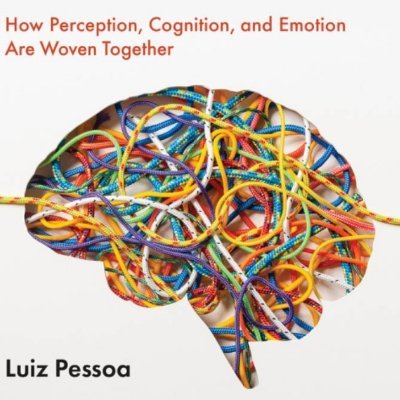
𝗕𝗿𝗮𝗶𝗻 𝗻𝗲𝘁𝘄𝗼𝗿𝗸𝘀, 𝘄𝗵𝗮𝘁 𝗮𝗿𝗲 𝘁𝗵𝗲𝘆? @LucinaUddin explains many of the challenges and controversies! Great discussion too. Check out the latest Neuroscience & Philosophy Salon. https://t.co/R4jD2JU37T
2
29
109

Shame is a powerful emotion rooted in secrecy, often making us feel damaged and unworthy. Its impact spans psychological, neurocognitive, sociocultural and institutional domains. At @TheBJPsych editorial ( https://t.co/BzqQIMbgrK), we reframe harmful shame as a health target
24
196
790
How distributed is the brain-wide network that is recruited for cognition? A Perspective by Matthew C. Rosen & David J. Freedman https://t.co/QGOd5SIIqy
0
39
140

Tsang et al. reviewed 13 studies combining TMS with intracranial EEG in humans and non-human primates. They found that stimulation can rapidly alter neuronal activity and connectivity, with some effects persisting for extended periods. https://t.co/3cvW3JzboR
3
51
195

#FiberDataHub (🌐 https://t.co/VNmcXxfZ7V) has passed 50,000 pre-processed dMRI subjects All standardized and ready for tractography, connectome mapping, and cross-study exploration — no more hours lost to topup/eddy! download it using #dsistudio or using python directly.
0
25
104

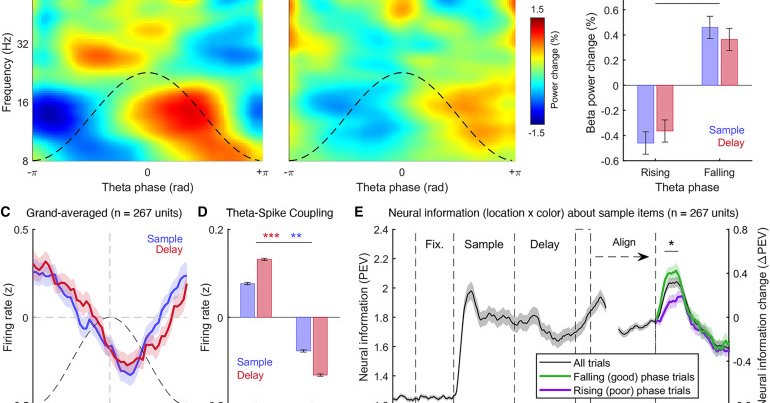
New paper: Working memory readout varies with frontal theta rhythms. A theta traveling wave swept across the frontal cortex like radar, modulating working memory performance. Because cognition is rhythmic. https://t.co/nmCcINu3ef
#neuroscience @MIT_Picower @mitbrainandcog @MIT
cell.com
Han et al. show that frontal theta oscillations rhythmically control access to working memory. The theta rhythm sweeps across the mental image, shaping behavior by coordinating spikes and beta...
10
45
181

Utilizing Video Oculography to Identify Visuospatial Neglect After Acute Stroke In this #BloggingStroke post, @JohannaSeidenMD discusses #Stroke article by Cazzoli et al. #AHAJournals @BrigitteCKaufm1 @KantonsspitalLU @UniLuzern
https://t.co/qEKJNi2cxo
0
33
122

New online! Non-invasive brain stimulation: current and future applications in neurology https://t.co/OTUNrrT0bc
1
69
244

@JRBneuropsiq I'm co-author on a paper on this (with Buzsaki and Peyrache). "The emergence of cognition from action". Roughly, imagined action, frequently followed by action selection. Hidden layer upon which imaged action takes place

pubmed.ncbi.nlm.nih.gov
Theories of brain function have evolved through multiple stages. The first proposition was that brain networks support a set of reflex responses, with current sensory inputs producing immediate motor...
2
6
36

The word "cognition" has its origins in classical terms related to the concept of knowing. Yet its use is often debated in psychology, psychiatry, and neuroscience. This collection of short essays addresses the central question: What is cognition? https://t.co/EVzurqEUS5

cell.com
Eleven authors with disparate relevant backgrounds give their view on what is meant by the word “cognition”.
5
38
151
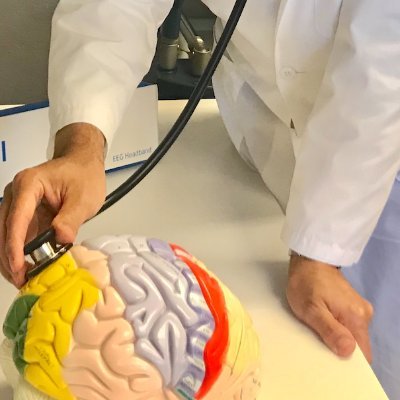
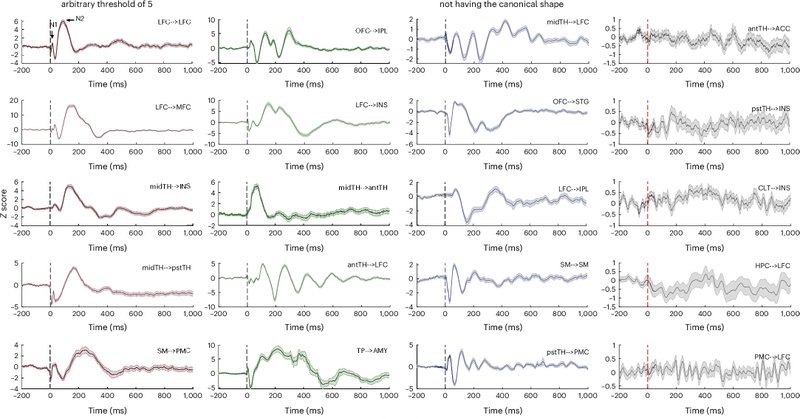
Decoding the human thalamus: iEEG and stimulation data now shared with anyone interested: https://t.co/vakaVEhGWA. Thanks to @VivekBuchMD for great collaboration and for taking us deep inside the human thalamus —what a ride! Also check https://t.co/PAfDFF5ifn in the same issue.
nature.com
Nature Neuroscience - Intracranial stimulation maps human brain causal connectivity, uncovering distinct pathways. The authors show that thalamic pulses uniquely evoke delayed theta oscillations,...
1
19
67

Did you know that neuroscience played a key role in AI’s development? Artificial Intelligence: From Mind to Machine explores how brain research led to artificial neural networks, machine learning, and modern AI. Watch the full documentary: https://t.co/jj55CE1nbm
141
907
3K
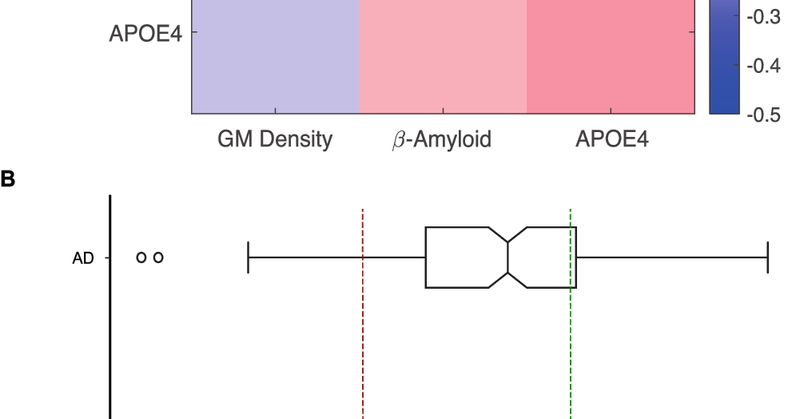
An A.I. model that predicts the course of Alzheimer's disease
nature.com
Nature Communications - Alzheimer’s disease (AD) drug discovery has been hampered by patient heterogeneity, and the lack of sensitive tools for precise stratification. Here, the authors show...
2
27
108
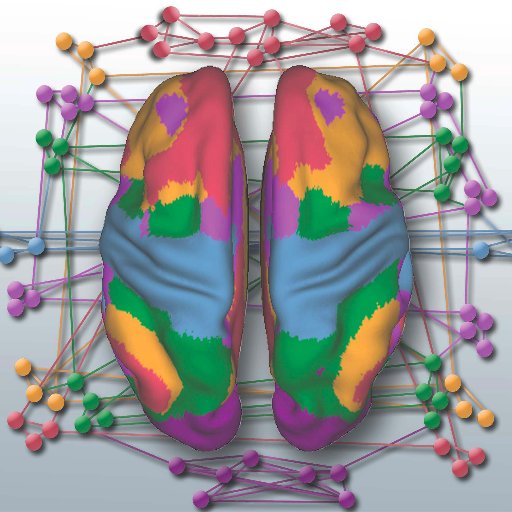
1/11 Excited to share our @Naturestudy led by @Leon_Oo1 @csabaorban @ZShaoshi
https://t.co/z51pMIGR5R It is well-known that AI performance scales with logarithm of sample size (Kaplan, McCandlish 2020), but in many domains, sample size can be # participants or # measurements...
5
67
161
1/ Every week in my neurology clinic, I see people lost in the search for a diagnosis. Sometimes, what’s causing their dementia symptoms is treatable — but was missed for years. We just published a new AI tool to change that. Here's why it matters🧵 @NaipMayo @MayoClinic #ENDAlz
2
10
30
Alert!!!! Anybody out there?!?! “An Action Networks Model for Pain” We propose a new model for chronic pain — and highlight two functionally connected cortical networks that could revolutionize how we treat it. 👉 thread below 🧵 https://t.co/rCIXXGqeis...
4
17
37
Our new discovery reveals how anesthesia causes unconsciousness. This advances our understanding of consciousness and can help make anesthesia safer.

A new study by @MillerLabMIT finds that an easily measurable shift of brainwave phase may be a universal marker of unconsciousness under anesthesia https://t.co/Uc6gLrZjnC
#neuroscience #anesthesia #consciousness @mitbrainandcog @ScienceMIT
9
48
237

🚨New Publication!!🚨 Transcranial alternating current stimulation (#tACS) can modulate inter-regional synchronization, cross-frequency coupling, traveling waves and more. Here we reviewed the current methods and evidence on how effective tACS is. https://t.co/SnVb5WWn4z
0
3
15
Using multimodal structural and functional neuroimaging approaches, Wiesman et al. show that in Parkinson's disease, alterations in alpha- and beta-band brain rhythms are related to degeneration of the noradrenergic and dopaminergic systems, respectively. https://t.co/4fohhLNI0t
1
43
127